Hydroforming
We are your hydroforming supplier for complex, lightweight metal parts. Using internal high-pressure forming, we shape tubes and sheet metal into geometries that are hardly possible with conventional processes – from development and tooling to series production.
Hydroforming shapes tubes and sheet metal with fluid pressure in a closed die – for complex shapes, lightweight structures and high-strength parts made in one piece.
Metal hydroforming services – tube and sheet hydroforming
- Tube hydroforming: complex hollow parts with varying cross-sections, branches and bulges
- Sheet hydroforming: shells and housings with demanding geometries
- Press capacity: hydroforming presses with closing forces of up to 2,000 t
- Lightweight design: fewer parts and weld seams, lower weight and high stiffness
- Process chain: pre-bending, hydroforming, laser cutting, joining and assembly from one supplier
- Volumes: prototypes, small batches and series production
Materials
Stainless steel, titanium, aluminium as well as carbon and high-strength steels.
Typical hydroformed parts
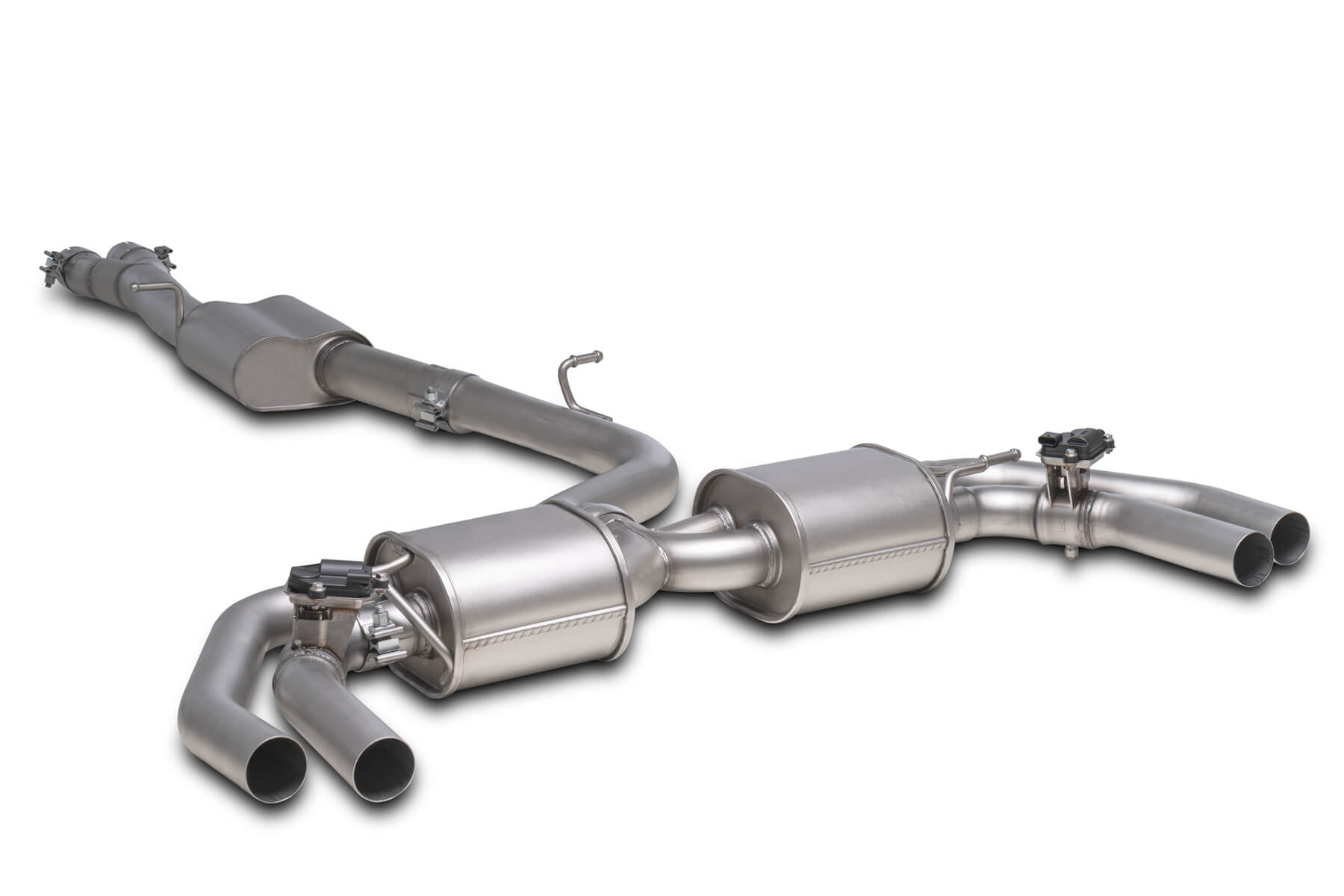
- Exhaust manifolds and exhaust components
- Frames, subframes and structural parts
- Complex tubes and fluid lines
- Cooling system components
Related processes
Tubes are pre-bent by CNC tube bending, trimmed by 3D laser cutting and joined by welding and brazing. Hydroforming tools come from our own toolmaking. For sheet parts, deep drawing can be the more economical alternative. Tubes made of stainless steel and titanium are joined by stainless steel and titanium welding, and finished assemblies such as exhaust systems are checked in assembly and end-of-line testing.
Hydroforming steel, stainless steel, aluminium and titanium
As a hydroforming manufacturer, we form tubes and sheets in all common metals: stainless steel hydroforming for exhaust and fluid components, hydroformed aluminium parts for lightweight structures, high-strength steel for chassis and subframe parts and titanium for motorsport and aerospace applications.
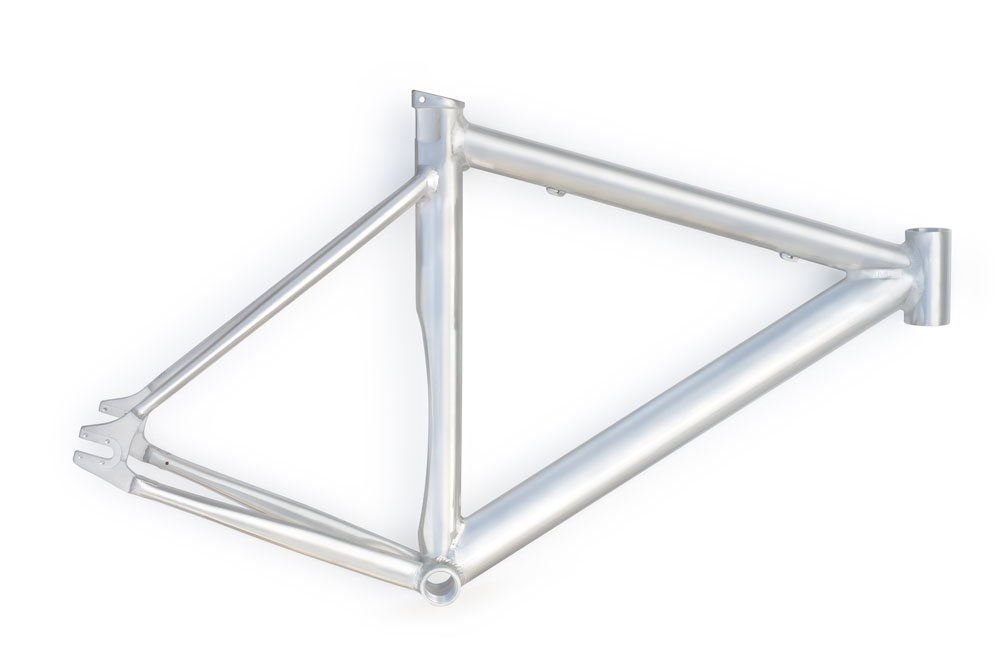
- Tube hydroforming: hollow parts with variable cross-sections, branches and bulges – e.g. exhaust manifolds, frame tubes and bicycle frames
- Sheet metal hydroforming: flat parts with deep, evenly formed contours and a high-quality surface
What is hydroforming and how does the process work?
Hydroforming is a metal forming process in which a fluid under high pressure presses a tube or sheet against the contour of a closed die. For tubes, the ends are sealed and pushed in axially while the internal pressure expands the tube into the die. Compared with welded assemblies, hydroformed parts need fewer joints, weigh less and are stiffer.
How hydroforming works – step by step
- Preparation: the tube is cut to length and pre-bent if required; the sheet blank is cut to size.
- Loading and closing: the workpiece is placed in the die and the press holds both die halves together with a high closing force.
- Forming: the tube ends are sealed, the fluid builds up internal pressure and presses the material against the die contour while axial punches feed in material.
- Finishing: after removal the part is trimmed, joined, inspected and, on request, assembled into a module.
Types of hydroforming compared with deep drawing
| Process | Typical parts | Strengths and limits |
|---|---|---|
| Tube hydroforming | Hollow parts with varying cross-sections and branches: exhaust manifolds, frame tubes, fluid lines | One part instead of a welded assembly, high stiffness; each part needs its own tool |
| Sheet hydroforming | Shells and housings with deep, evenly formed contours | High surface quality and uniform wall thickness; longer cycle time than deep drawing |
| Deep drawing | Cups, trays, covers and housings made of sheet metal | Short cycle times, economical in large series; very complex geometries need several drawing stages |
Hydroforming advantages and disadvantages
Advantages:
- Fewer individual parts and weld seams, so less joining effort
- Low weight combined with high stiffness and strength
- Complex geometries with varying cross-sections in one piece
- Tight tolerances, high repeatability and good material utilisation
Disadvantages and limits:
- Each part needs its own tool – the process pays off sooner the more complex the part is
- Longer cycle times than stamping or deep drawing
- The material must be sufficiently formable; very tight radii are possible only to a limited extent
Certified quality: IATF 16949 · ISO 9001 · DIN 2303 – view certificates
Automotive
In the automotive sector, hydroforming makes an important contribution to the production of components such as exhaust systems and structural parts. The process enables the production of intricate shapes and designs that improve vehicle performance and fuel efficiency.
For example, hydroformed exhaust systems can be designed to optimize airflow, reduce back pressure and improve engine efficiency. Similarly, hydroformed structural parts can provide greater strength and rigidity while reducing weight, which contributes to better handling and lower fuel consumption.
Aerospace
In aerospace, low weight and high strength are decisive. Hydroforming enables complex, three-dimensional components with high precision and repeatability – and avoids joints that would add weight and inspection effort.
Stainless steel, titanium and aluminium are the main materials used.
Bicycles, Motorcycles & Motorsport
In two-wheelers and motorsport, every gram counts. Hydroforming produces thin-walled hollow parts with variable cross-sections in one piece – light, stiff and with a high-quality finish. As MC by REMUS, we bring experience from the development and production of sports exhaust systems.
- Bicycle frames and frame tubes for bicycles and e-bikes – with variable cross-sections and fewer weld seams
- Exhaust manifolds and collectors in stainless steel and titanium
- Frame and structural parts for motorcycles with optimised stiffness
- Prototypes and small series for racing and special editions
Mechanical Engineering & Energy
In mechanical and plant engineering, a single hydroformed part often replaces an entire welded assembly. This eliminates joints, reduces the risk of leakage and improves flow in media-carrying parts.
- Manifolds and header pipes for hydraulics, cooling and process engineering
- T-pieces, branches and shaped tubes without additional weld seams
- Housings and hollow profiles for machines and plants
- Components for energy technology, such as line and heat exchanger parts
Medical technology
Hydroforming is also an option in medical technology – for thin-walled, precise hollow parts and housings in stainless steel or titanium where smooth surfaces and few joints are required.
Talk to us: we will check the feasibility of your part.

As your innovation partner for complex solutions, Metal Competencies uses hydroforming to produce high-quality, precision-manufactured components for you.
We optimize your processes. Costs are reduced. We are driven by quality and individuality.
Creating complex solutions for our customers is the most important thing for us – simply our core competence.


Hydroforming FAQs
How do I know if hydroforming is the right choice for my project?
Hydroforming is worth considering when a part has a complex geometry, varying cross-sections or would otherwise be welded together from several pieces. The material must be sufficiently formable. Send us your drawing and we will assess feasibility and the most economical process.
How does hydroforming compare to stamping and welding in terms of cost?
Stamping and deep drawing have shorter cycle times and are usually cheaper for simple sheet parts in large volumes. Hydroforming needs a dedicated tool per part but replaces several parts and weld seams with one component – the more complex the part, the sooner it pays off. Welded assemblies need little tooling but more joining and inspection effort per part.
Is hydroforming environmentally friendly compared to other metal forming methods?
Hydroforming makes good use of material and enables lighter parts, which can reduce weight and consumption in the finished product. How it compares in an individual case depends on the part, the volume and the alternative process.
What is the difference between hydroforming and deep drawing?
In deep drawing a punch forms the sheet into a die. In hydroforming a fluid under high pressure takes over the role of the punch or the die. Hydroforming allows more complex geometries and hollow parts made from tubes; deep drawing is usually more economical for simpler sheet parts in large series.
Which materials are suitable for hydroforming?
Stainless steel, aluminium, titanium as well as carbon and high-strength steels. The key requirement is sufficient formability; wall thickness and geometry are matched to the material.
What are the advantages of hydroformed parts?
Hydroformed parts are made in one piece, which saves individual parts and weld seams, reduces weight and increases stiffness. Tight tolerances, high repeatability and good material utilisation are further advantages.